

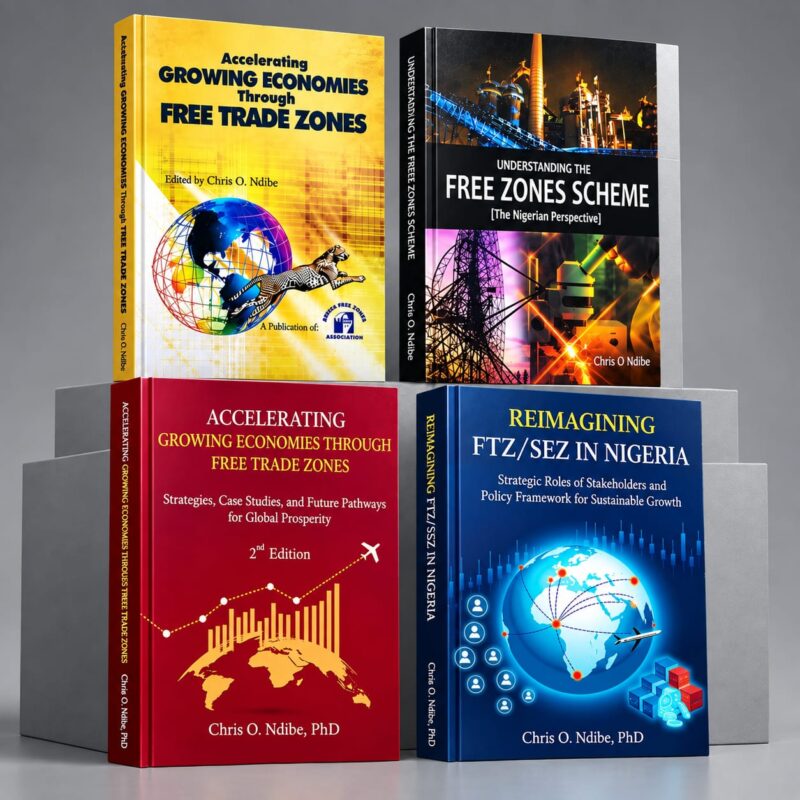
Free Trade Zones can be powerful instruments for attracting investment, expanding exports, creating jobs, promoting industrialisation and integrating Nigeria more effectively into regional and global value chains.
But Free Zones do not succeed merely because they are declared. They succeed when policymakers, regulators, developers, operators, investors and other stakeholders understand how the scheme is designed to work.
Over the years, drawing from my experience as a pioneer management staff of NEPZA, former General Manager of the Calabar Free Trade Zone, investment promotion practitioner, consultant, researcher and trainer, I have tried to document both the principles and practical realities of Free Trade Zone development and management.
These four books on Free Trade Zones represent part of that continuing effort to contribute to the body of knowledge available to Nigeria and other developing economies.
They address the Free Zone concept from different perspectives—understanding the scheme, managing and reforming it, attracting investment, learning from international experience, and exploring how Free Zones can become genuine instruments of economic transformation.
At a time when Nigeria is reviewing important aspects of its Free Zone framework, these books are particularly relevant.
My appeal to stakeholders is simple: do not discuss the future of Nigeria’s Free Trade Zones without first understanding the philosophy, economics and operational principles behind them.
I therefore recommend the books to read.
A Free Zone is an economic policy instrument that must be properly understood, professionally managed and consistently supported.
Let us build the Free Zone knowledge that Nigeria needs for the industrial future it deserves.
— Dr. Chris O. Ndibe
Free Trade Zone Consultant | Researcher | Author | Trainer
